Spice Drawer Organization: A Calm Drawer in One Afternoon
This post shares gift and decor ideas. As an Amazon Associate, NestingNook earns from qualifying purchases. Prices change often, so please check the current price before you buy.
Every cook knows the spice drawer. It starts as a good idea — everything in one place, easy to reach — and ends as a jumble of half-empty jars, two open packets of cumin and a mystery tin from 2021. You buy paprika because you cannot find the paprika, and then you find it behind the turmeric.
The fix takes one afternoon, and it is mostly emptying. A calm spice drawer is not about buying a matching set; it is about knowing exactly what you have, in jars you can see into, with labels you can read at a glance. Here is the whole system.
1. Take everything out — yes, everything
Pull every jar, packet and tin out of the drawer and lay it on the counter. This is the only part that feels like work, and it takes ten minutes. What you will find: duplicates you forgot you owned, spices that expired years ago, and at least one jar with no label at all. That is the whole point of doing it properly — you cannot organize what you cannot see.
While the drawer is empty, wipe it out and line it if you like. A plain non-slip liner stops jars from sliding around every time the drawer opens, and it costs almost nothing.
2. Sort into three piles, and be honest
Make three piles: keep, use up, and let go. Keep the spices you used in the last month. Use up the ones you reach for rarely but still like — put them at the front of the queue for the next few weeks. Let go of anything past its best, anything that smells like nothing (a spice with no smell has no flavor left), and anything you cannot identify.
Smell is the test. Open the jar and breathe in. If the smell is strong and clear, it stays. If it is faint or dusty, it has done its time. Ground spices fade faster than whole ones, so be ruthless with the ground jars and kinder with whole peppercorns, cinnamon sticks and bay leaves.
3. Decant into jars you can see into
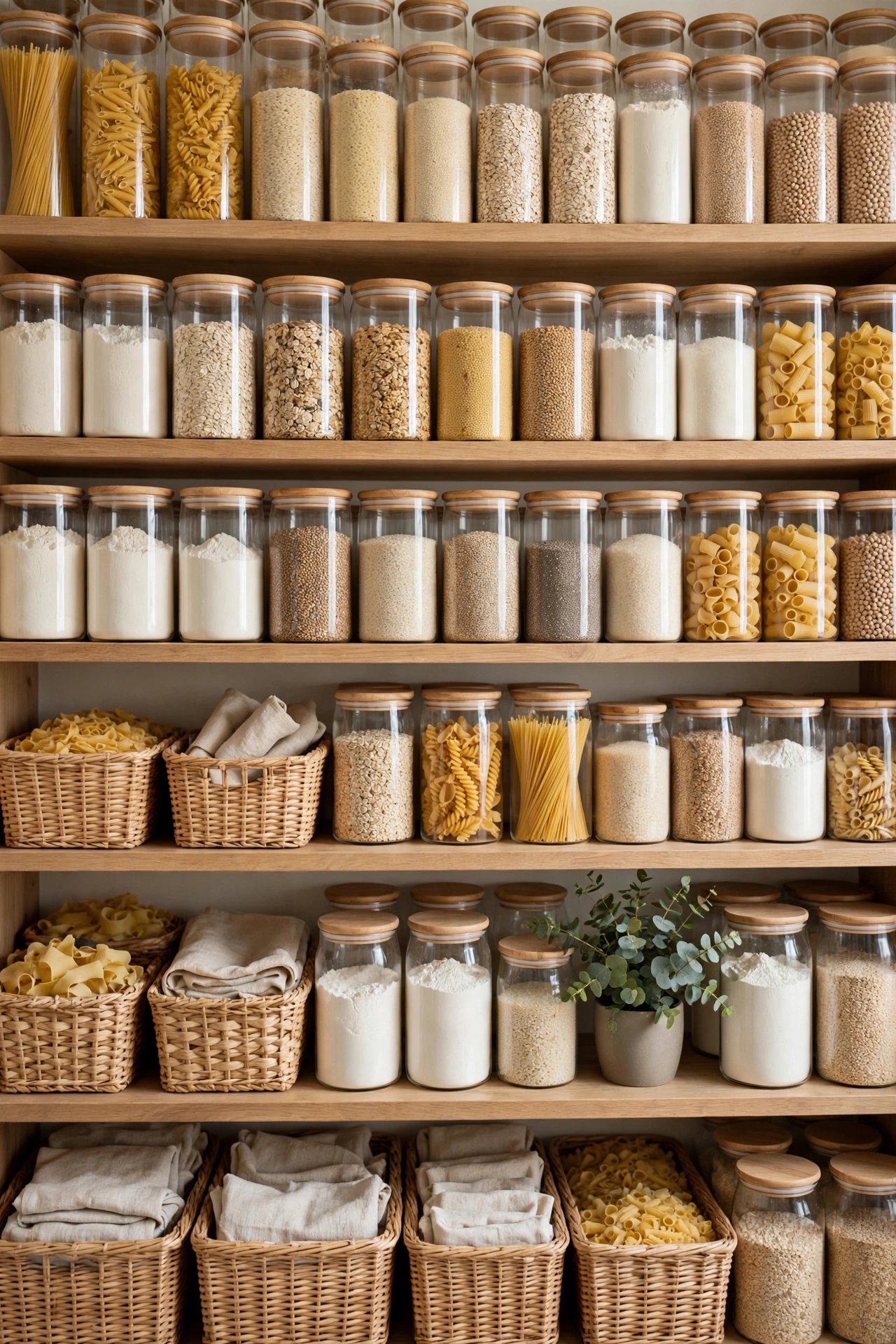
You do not need a matching set of expensive jars. You need jars that are the same shape, so they sit neatly side by side, and glass, so you can see what is inside without opening anything. Small square jars waste the least space; round jars leave gaps. Keep the lids the same too — one size of lid for the whole drawer means no hunting for the right one.
Decant only what you use. The half-empty packets of things you tried once can stay in their packets at the back of the pantry. The drawer is for the everyday spices, not the archive.
4. Label the lid and the front
Label every jar twice: once on the lid, so you can read it looking down into the drawer, and once on the front, so you can read it when the jar is on the counter. Use the same label style for all of them — same size, same handwriting or same printed labels — because a drawer full of different labels looks messy even when it is perfectly organized.
Write the date you filled the jar on the bottom, in pencil. Six months from now you will know exactly how old the contents are, without guessing.
5. Arrange by how you cook, not by alphabet
Alphabetical order looks tidy and works badly. You do not cook alphabetically. Put the spices you reach for every day at the front — salt, pepper, cumin, paprika — and the occasional ones at the back. Group the ones you use together: the curry spices in one row, the baking spices in another, the chilli and heat in a third. Your hand will learn where everything is within a week.
6. Stop buying doubles for good
The reason the drawer fills up again is the shopping trip. Before you shop, take a photo of the open drawer on your phone. In the shop, the photo tells you in two seconds whether you already own the cumin. It is a silly little habit and it works completely. Pair it with a rule: one jar in the house per spice, unless the jar is nearly empty.
When a jar runs low, write it on the shopping list the same day — not on the day you need it and discover the jar is empty. A spice drawer stays calm when the refills happen before the crisis, not during it.
Keeping it calm after today
The system needs almost no maintenance. Once a season, open the drawer and smell the three jars you use least. Once a year, check the dates on the bottoms. And every time you buy a new spice, ask it one question: is there already a jar of this in the drawer? If the answer is yes, put it back on the shelf.
Frequently Asked Questions
What are the best jars for a spice drawer?
Small square glass jars with matching lids. Glass lets you see what is inside, square jars waste the least space, and one lid size for the whole drawer means no hunting for the right lid.
Should I decant every spice into jars?
No — only the ones you use regularly. The drawer is for everyday spices. Rare or single-use spices can stay in their packets at the back of the pantry.
How do I stop buying spices I already own?
Take a photo of the open drawer before you shop. The photo tells you in two seconds what you already have, and it stops the duplicate cumin completely.
How long do ground spices last?
About six months at full strength, then they fade. Write the fill date on the bottom of each jar in pencil, and smell the jar before you cook — if it smells faint, it is time to replace it.